
19 January 2025
Why did 11.00 pm find us standing in the middle of a cemetery? Read on, to find out.
Pod report: I had a good night’s sleep. So did Pen. So, whilst it’s a bit awkward outside the pod, the most important thing is that you awaken refreshed.
Right, so how do these pods work?
With Lylo, (part of Jucy campervans), you receive an email with a QR code, and when you check in, you scan that code and it either instantly allocates you a room, or you have to fill in further details. The information you receive will come in the format of: Floor 0, Dorm POD R07, Bed R7 – P4. You take a bamboo covered key card, hold it over the card reader, and it programmes it for that particular bed.
Then you go to floor 0 (ground), room 7, pod/bed 4 and let yourself in using the keycard. (As mine was a bottom bunk and Pen’s P7 was a top one, and her knees aren’t the best, we swapped). There is a decent-sized locker with your bed’s number on under the bottom bunks and one of the first things you do is programme this with your own private pin number.
Then you’ve got to get yourself settled in. This is probably easier on the bottom bunk than the top, but the ladder is good and solid and there’s a strong handle for you to hang onto. You clamber inside and spread the provided duvet out over the already in place bottom sheet and pillow. Slipping your keycard into a slot in your pod provides you with electricity to the two power points, two USB jacks, light, and/or a cooling fan. Once you’ve done everything you’ve got to do, got yourself sorted and ready for bed, then you climb in and pull down a blind that blocks your bed from the other seven people sleeping in your dorm.
The mattress is soft, the bedding clean, and the experience is quite pleasant. It’s just a hassle having to climb in and out of your bed, open a lock whenever you need anything, trying to work within a confined space with seven others, and use shared facilities. But despite all those inconveniences, I would recommend it for a one-night stay when you’re not planning on spending a lot of time at your accommodation.
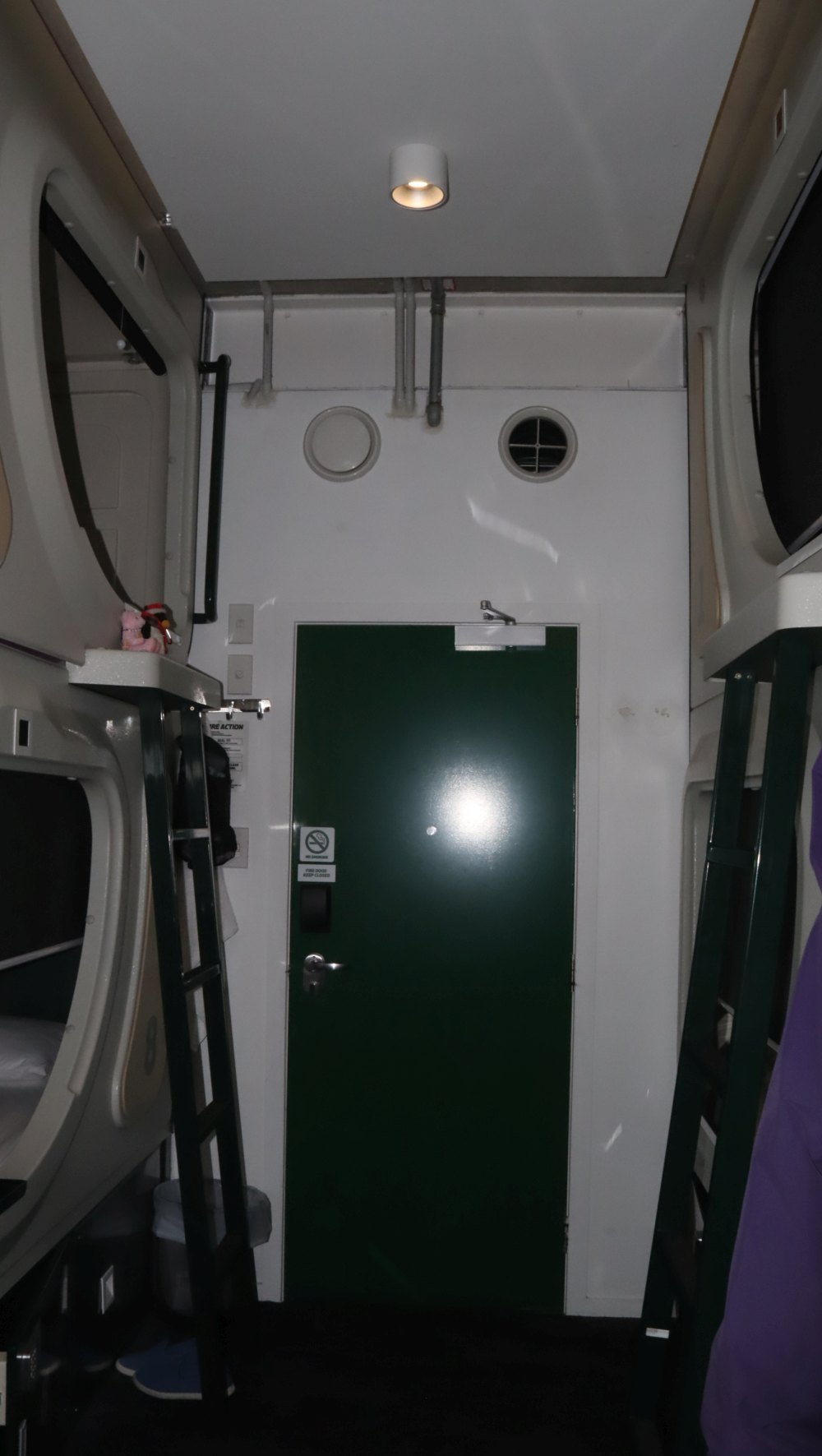

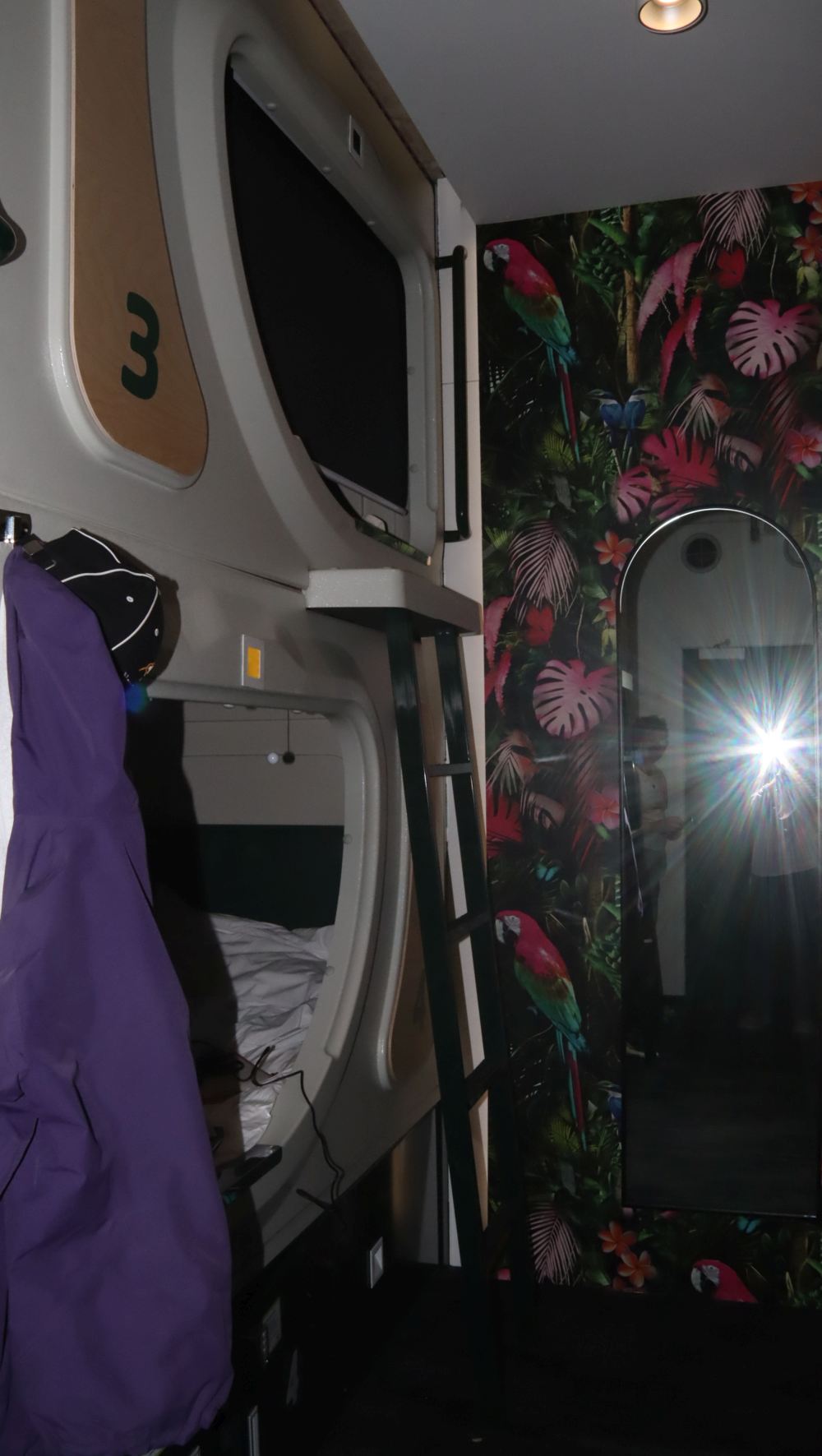
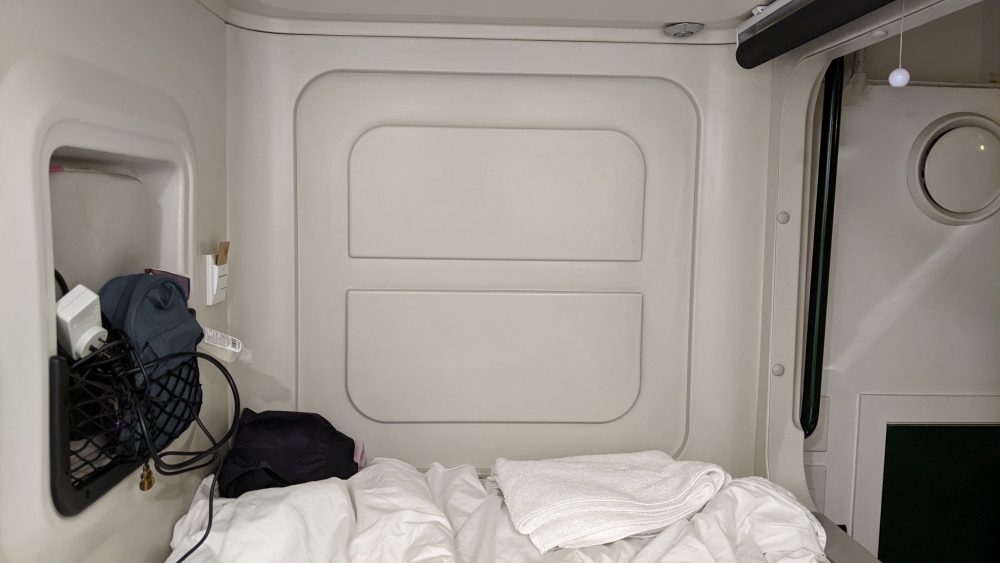


One thing we discovered, fairly late into our stay, is that when you have your keycard in its pod slot, a light appears outside the pod, above your bed. This is a sign to other dormitory users that, if the blind is down, someone is at home and possibly trying to sleep.
I did have to get up at 6.00 am and go to the loo, and remembering to take my keycard to let myself back into the room was a bit of a pain. (As was clambering down a ladder without waking anyone else.) So was finding someplace to store it during the process as my PJs don’t have a pocket.
But it was all good.
I think I told you that our plan for today was to ride the Kingston Flyer, and how that fell through because we couldn’t get there. So we had to find a plan B.
This involved going to the local i-SITE, which was only a block away and, just in case we were going to be lucky, we did ask about transportation to the Flyer. As this definitely wasn’t going to work, so we went second best and booked places on the TSS Earnslaw.
That was at 3.00 pm, so we had to find something else to do in the interim. That’s easy in Queenstown. A five-minute walk and we were in the glorious peace and quiet of the Kiwi Park. We got there just in time for a talk at the Kiwi House, which gave us information about the five Kiwi present, and in general.
The one problem with this talk was that the Kiwi House was at the other end of the complex and we kept on seeing things we wanted to stop and look at. Like this absolutely magnificent Karearea/NZ Falcon and some skinks.


When we finally got to the Kiwi House and the talk started, we were told that the five housed in the complex were all North Island Brown Kiwi. This was because, for some reason, they are the only sub-species that is happy to breed in captivity. Naturally, the display area is darkened to keep the Kiwi happy and it took some time for our eyes to adjust, but once we could see them moving, we were as close as a pane of glass to some of them. One even tapped on the glass to get Pen’s attention. (Her light sensitive specs hadn’t cleared yet.)
A short time after that talk, another was due to happen on conservation at the other end of the complex, so we “hurried” over to that arena.
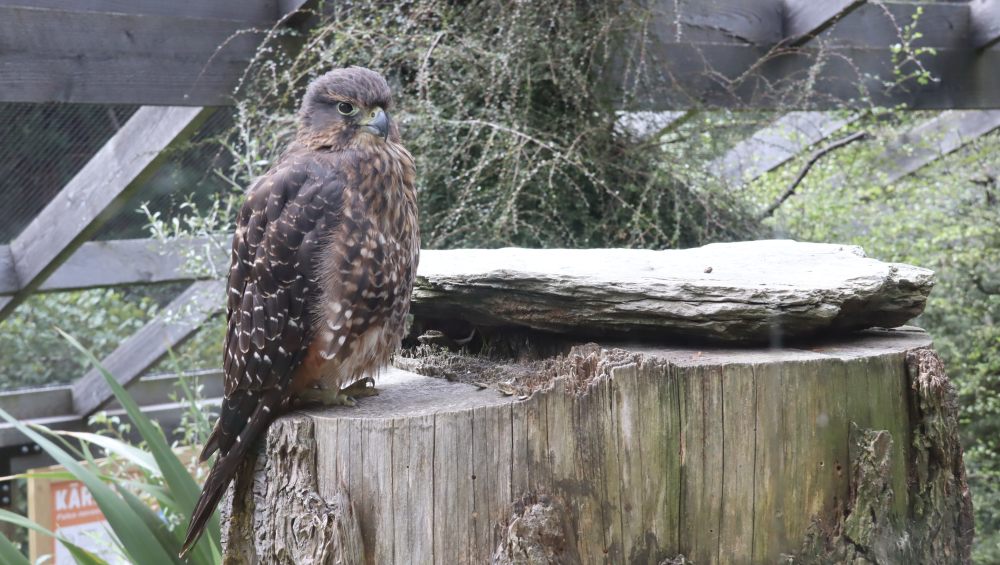


Aren’t Karearea just gorgeous? And imperial.
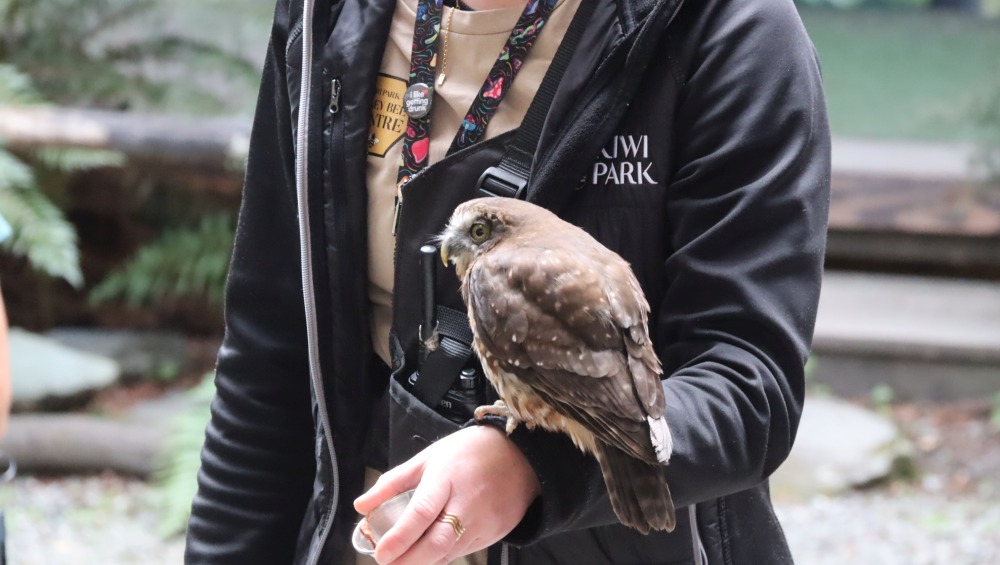
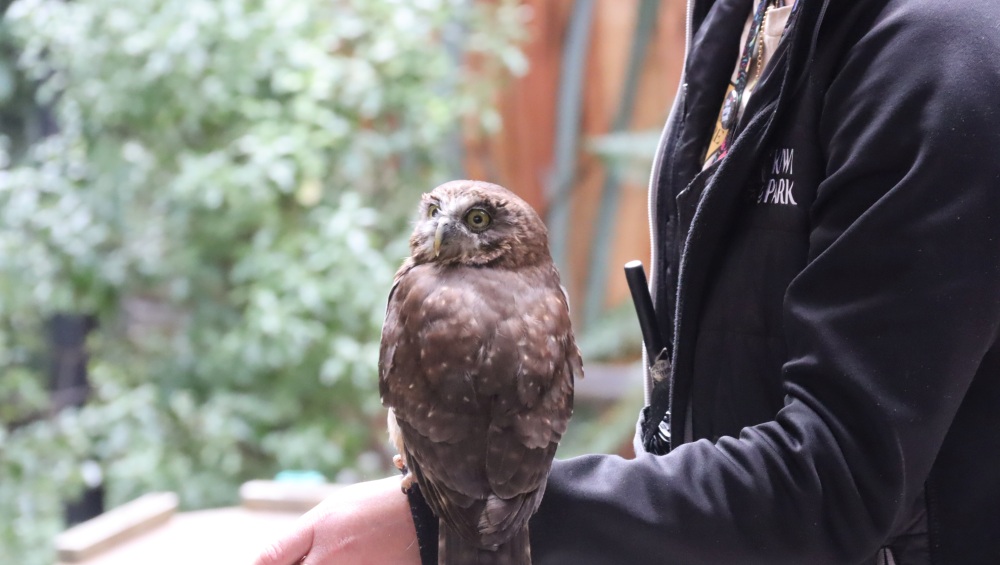
This was equally entertaining and even showed off genuine animals. The first was a Ruru/Morepork owl called Molly. Beautiful. I love them. It did a little bit of flying, and then allowed its carers to carry it amongst us so we could get a closer look. Then it was carefully taken away by another carer.
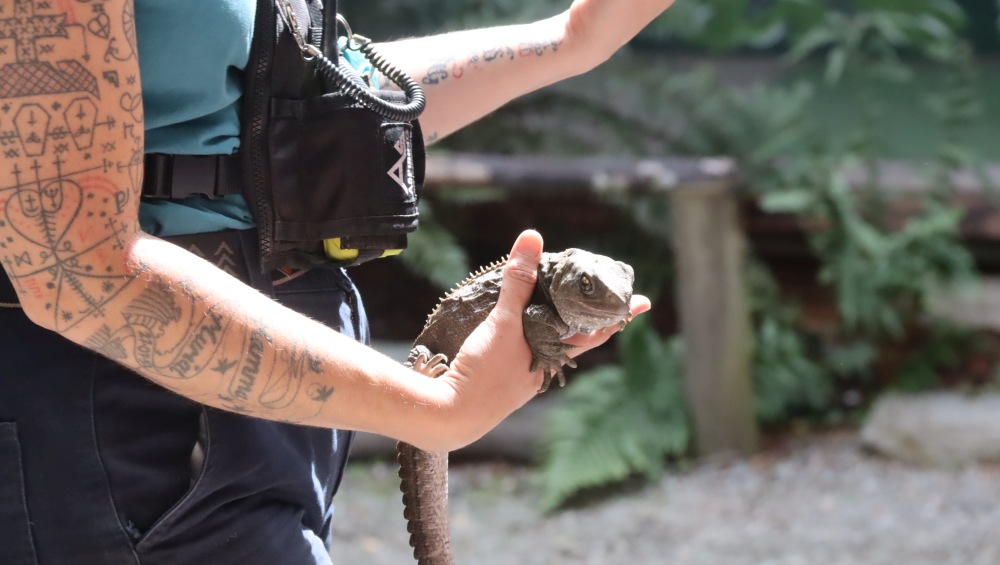
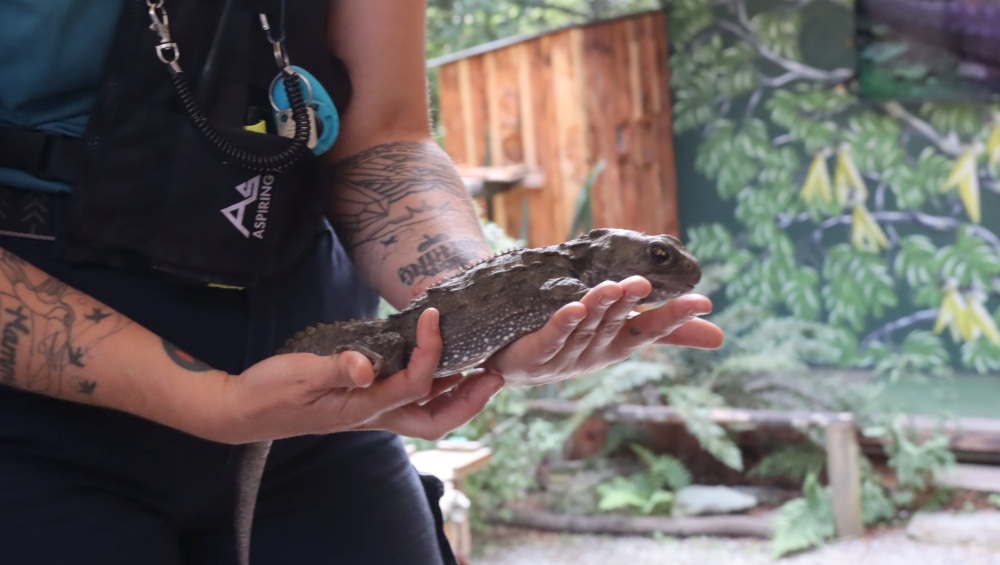
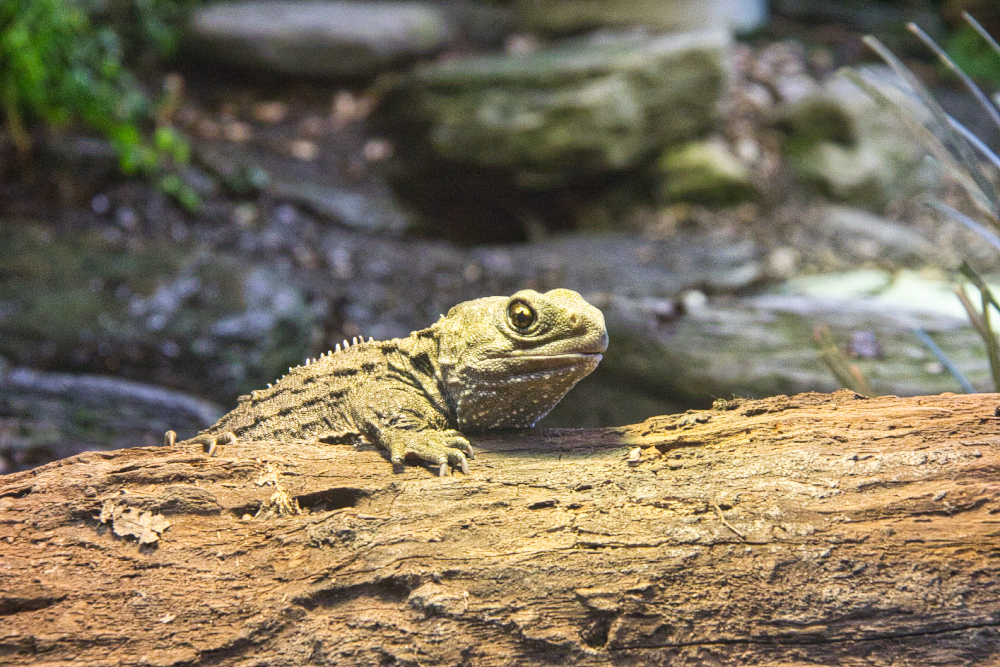
The next animal revealed to us was a Tuatara. If I remember rightly, this one was in its early twenties and, therefore, still a juvenile. It didn’t have the white spines reminiscent of the adult males of its species. It’s unknown how long Tuatara live for as no person’s lived long enough to know one from hatching to old age. They think they could live in captivity as long as 200 years and there’s a Tuatara in Invercargill called Henry who became a father, possibly for the first time, at age 111. He now has two girlfriends, both fifty years his junior.

The next birds we were introduced to were introduced: Rainbow Lorikeets. These were displayed as an example of how easy it is to upset the balance of nature. They were originally bought as pets. The family soon realised that they had the personalities of a four-year-old and would rip up and dirty everything, AND that they lived for 25-years. And so, thinking they were being kind, they were released into the wild, where they upset the natural balance and out-competed with native fauna.
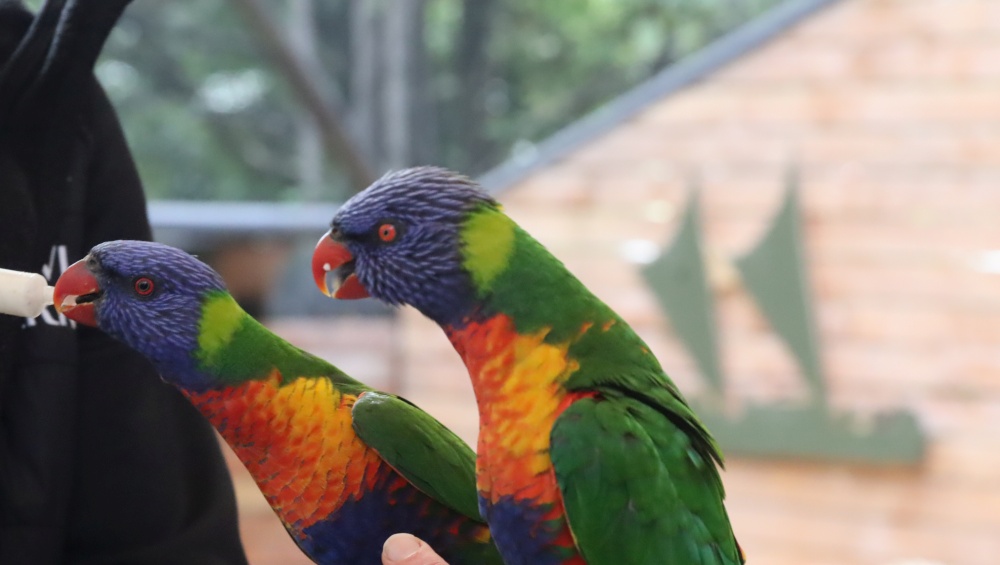
These two had been trained to fly between the two carers and both Pen and I had them brush the tops of our heads as they flew.
Next up was Terri the Kiwi. Naturally, they couldn’t bring a real nocturnal kiwi out to show off, so Terri was a (rather motheaten) specimen of taxidermy. But she did give us a chance to see a Kiwi’s vestigial wing – which is still evolving to be smaller and smaller and my completely disappear within a couple of hundred years. Later, we also got to touch Terri and feel how different her feathers were.
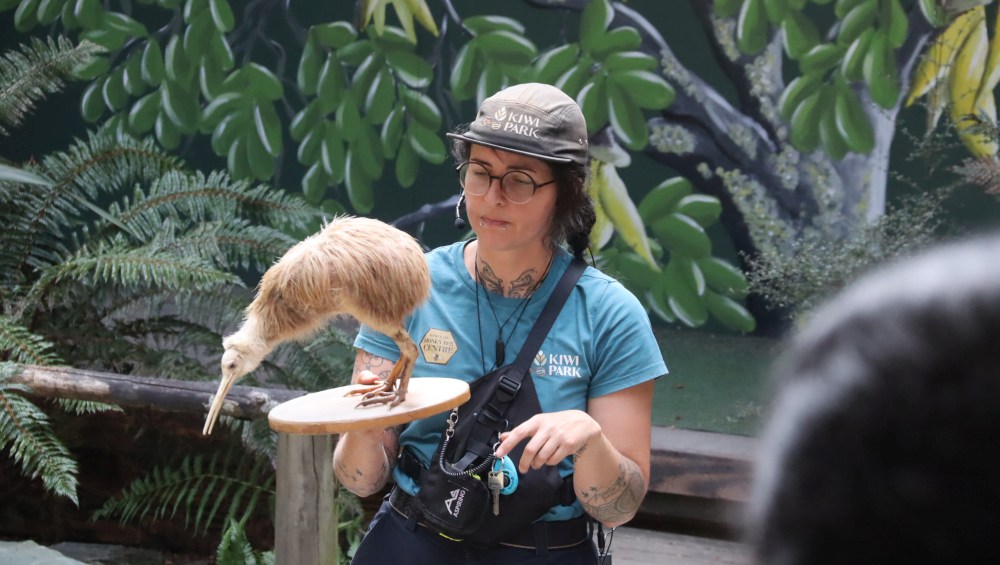
An x-ray of a Kiwi due to lay its egg within 24 hours was also shown off. The egg filled the bird’s abdomen, and its organs were squashed to the front. For the last day or so, then mum can’t eat or even drink. Just as well it’s the male that takes over the incubation duties.
And, just so we got an idea what the female Kiwi had to deal with, an “egg” of the size and weight of a real egg was passed around. There’s some heft to them!
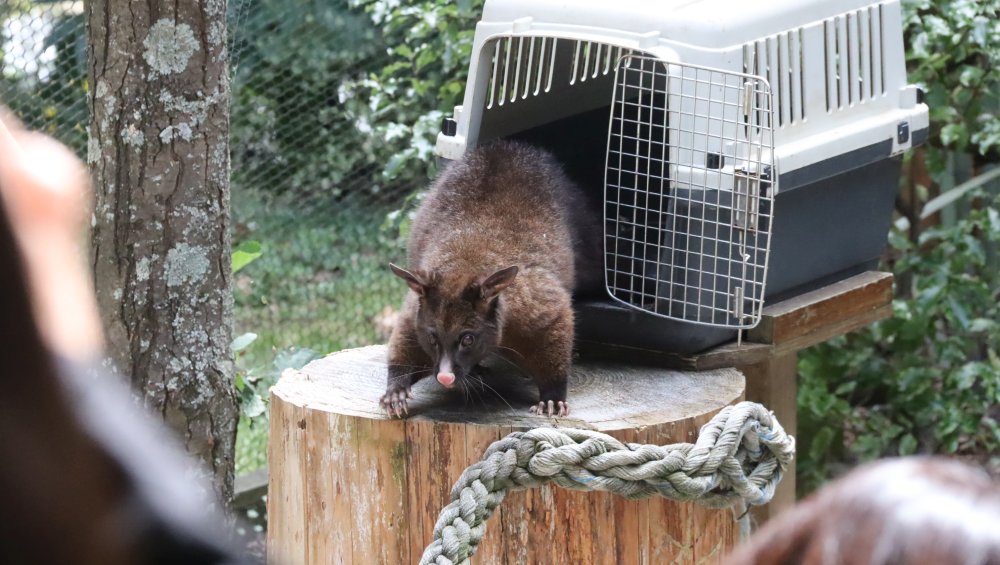
The next critter was an Australian Brush-tailed possum. Terror of the New Zealand bush. And cute. One thing that I learnt that was interesting, was that the possums in New Zealand were evolving to be bigger, stronger, and darker than the Australian variant. This means that, although the Aussies are an endangered species and there has occasionally been talk of repopulating them with “our” possums, the reality is that the New Zealanders would just overpower the Aussies.

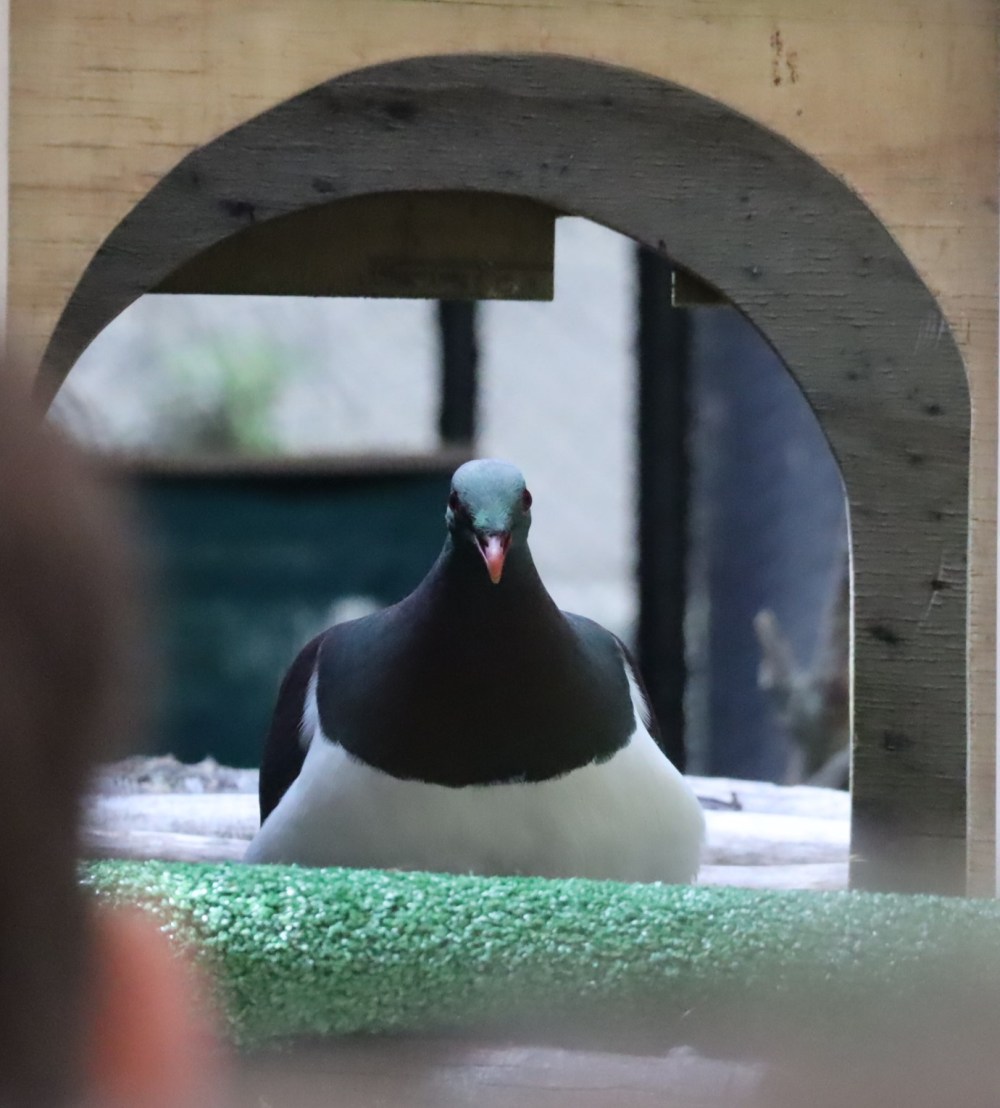
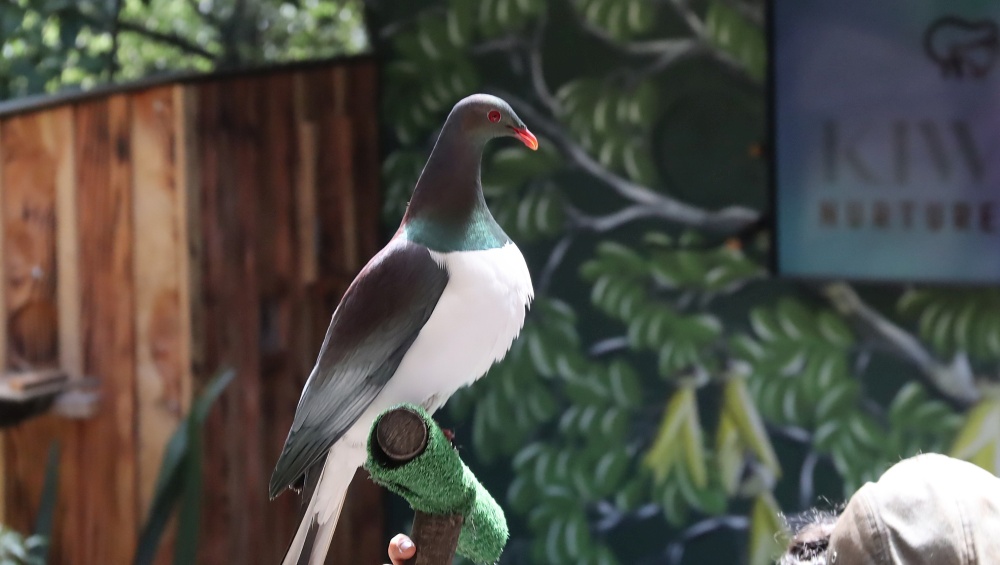
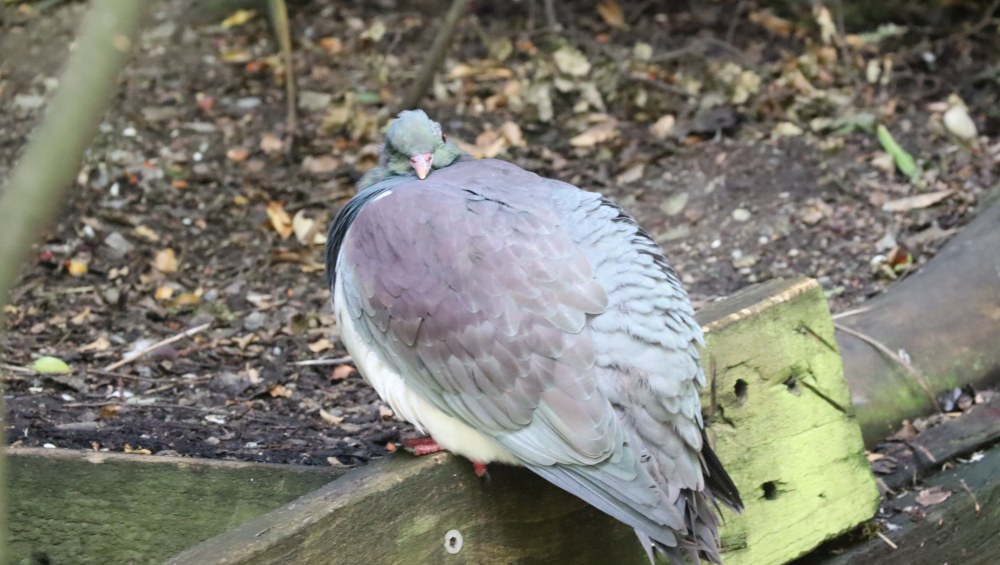
Next guest was a Kereru/New Zealand wood pigeon. He wasn’t so keen on flying between the posts, although he did leave a deposit behind the man sitting next to me. He also had a bit of a crush on one of the carers and did a dance for her approval. Their heads are the size of a two-dollar coin and they can swallow seeds and berries the same size. (That would be the equivalent of us swallowing a melon.) This means that they are important seed dispersal mechanisms in the wild and that the loss of the Kereru would mean the loss of some of our plant species.


When that very interesting talk was over and we’d introduced ourselves to Terri, we went for a wander through the park, seeing juvenile and “newly hatched” Tuatara.


We then went parrot hunting. The Kea’s enclosure was being revamped, so they aren’t in a great space at the moment, but we did have to hide Kally and Scott away in case a Kea took an interest in them. This was unlikely to happen as two of the Kea only had interest in each other.
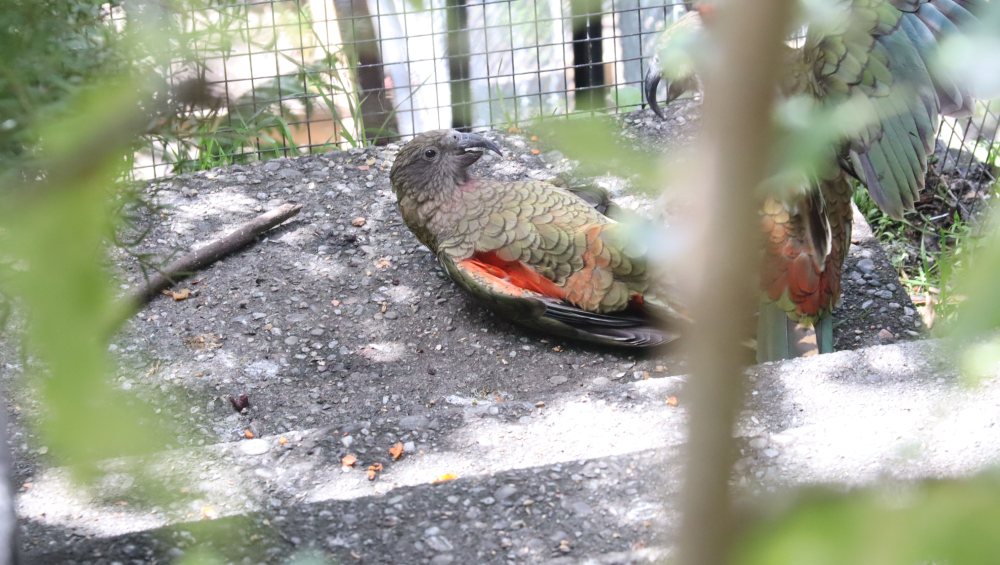


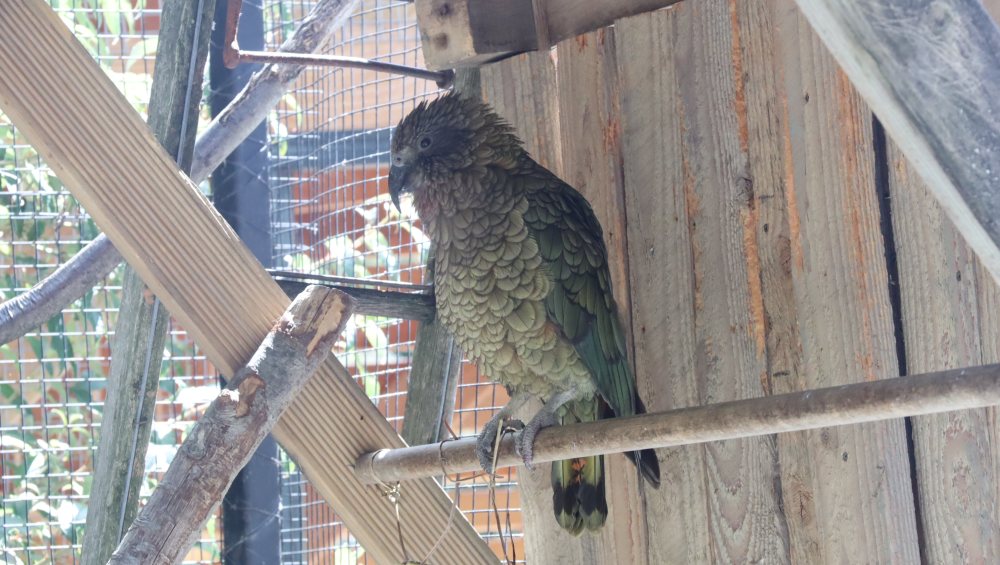
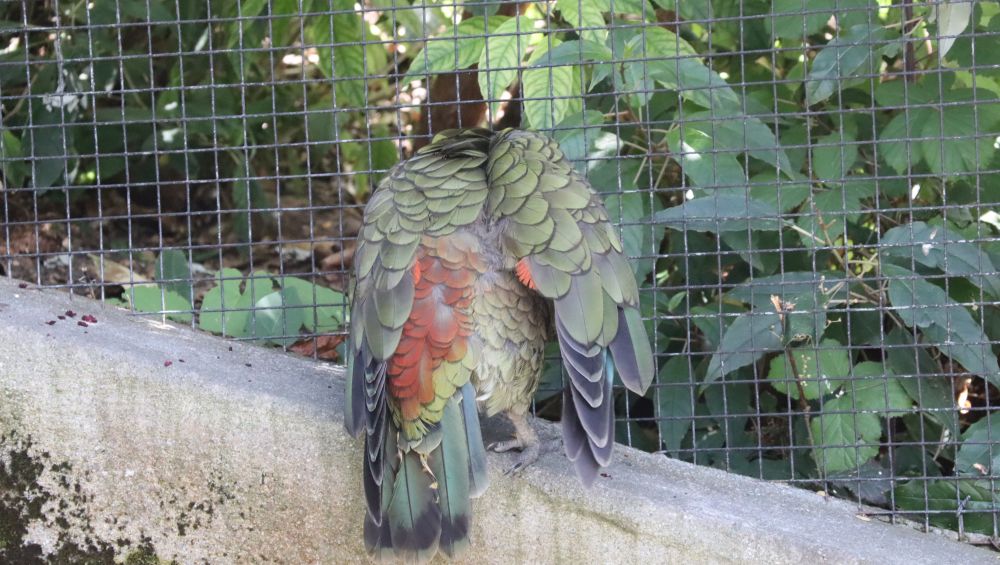
Following one parrot, we went to see another – the Kākā. When we’d been heading to the Kiwi talk the pair of them had been having an argument with one another. By the time we got back, about midday, one was having a preen and the other a siesta.

About now we realised that we had to get moving – which was a disappointment, as we could have happily spent the rest of the day in the Kiwi Park. So we were only able to have brief encounters with other residents like the Buff Weka.

More Kereru and Red-crowned Parakeets caught our attention, before we finally managed to escape. (After I’d bought a Hoiho magnet for Pen and a Pīwakawaka keyring for myself.

For lunch we went to a bakery (where I bought a chicken salad) and we went down to Lake Wakatipu’s edge to enjoy it. Followed by a simply divine chocolate ice cream from “Patagonia” a place that made its own ice cream and chocolates. It was the smoothest, silkiest, ice cream I’ve ever had. And very chocolatey.
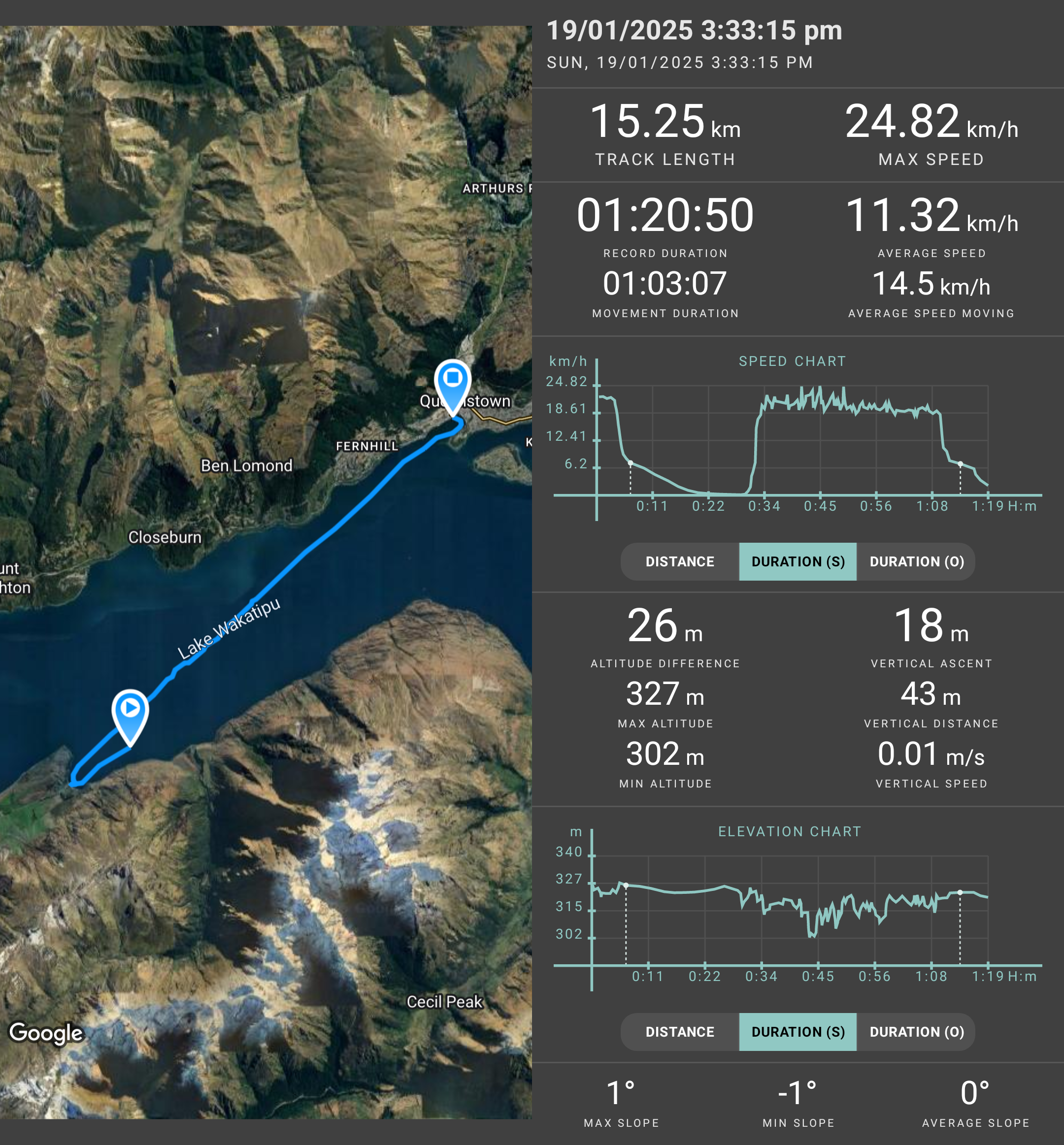
It was time to head to the RealNZ office. (They really have a monopoly down here, but they deserve it with the quality of their products and services. And they are definitely equal opportunity employers.) We checked in, were directed into a queue that snaked back upon itself a couple of times, and then waited, and watched, as the TSS Earnslaw sailed in. (TSS = Twin screw steamer)
She’s beautiful and, we figured, a good comparison to the modern Milford Wanderer. One being the original and the other a copy.
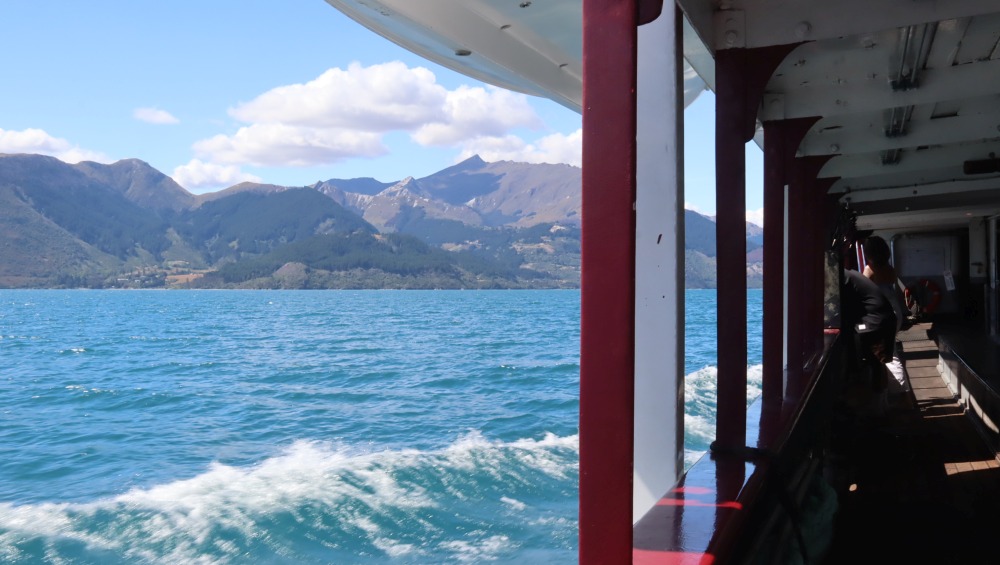
We spent the outwards trip sitting at the bow and enjoying the scenery.
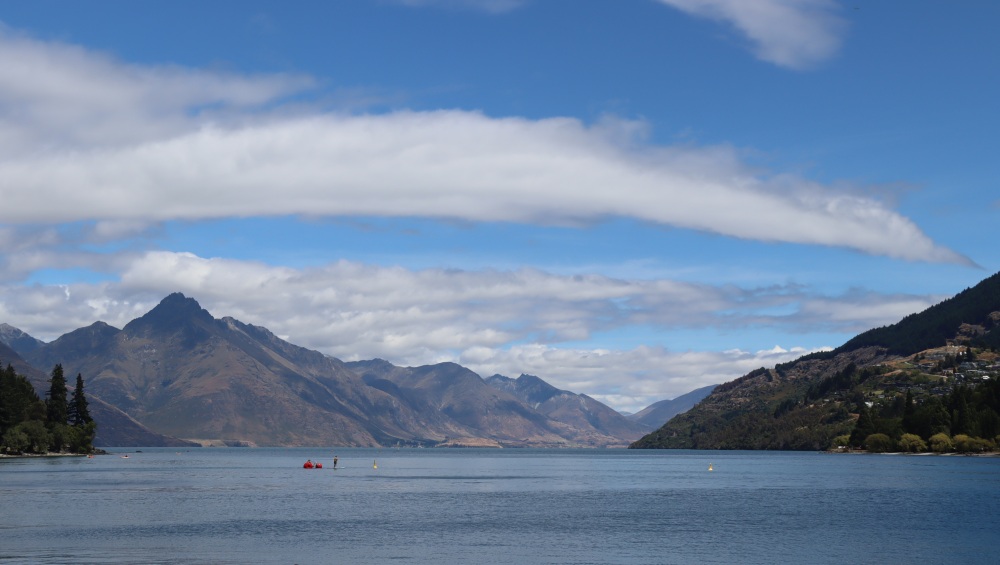

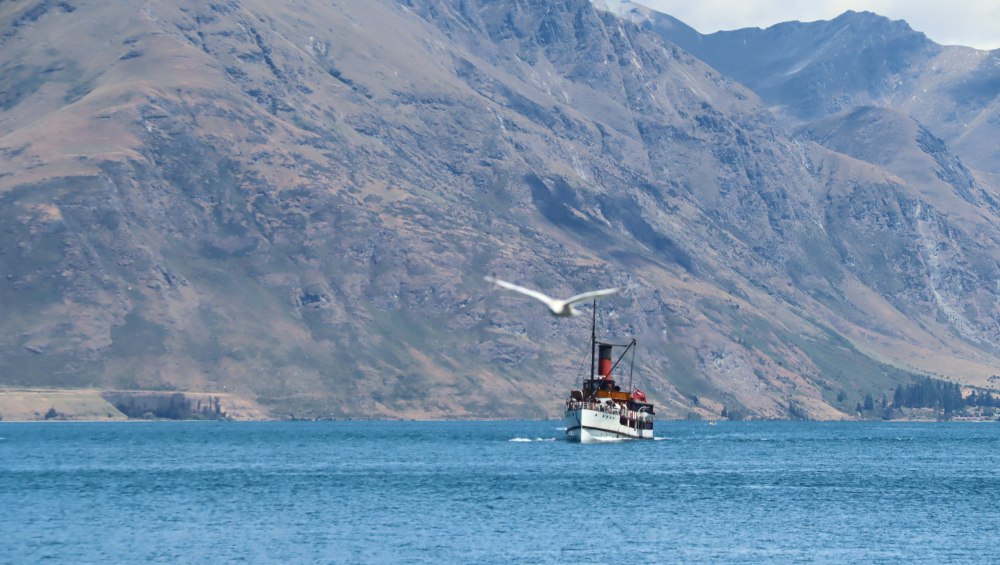
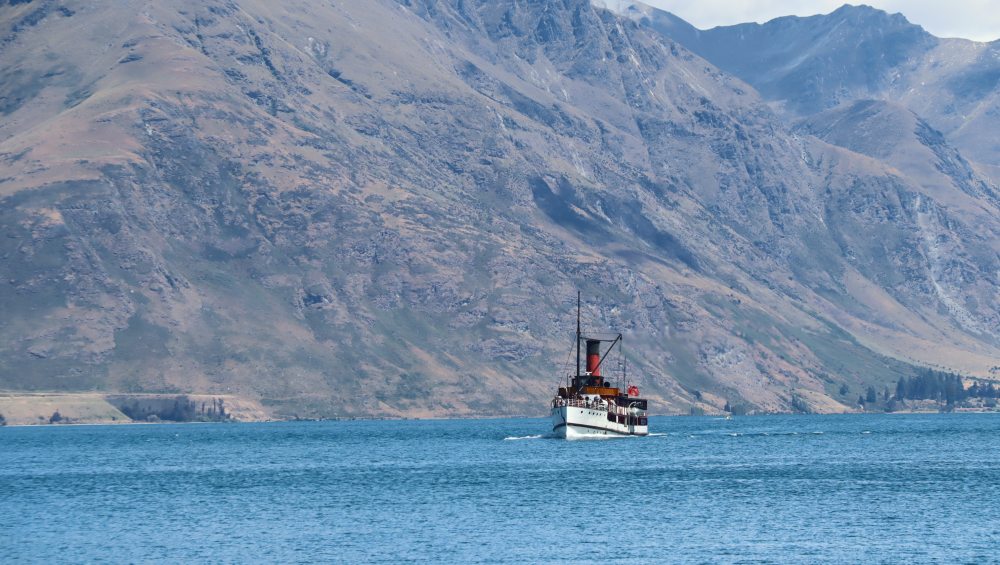

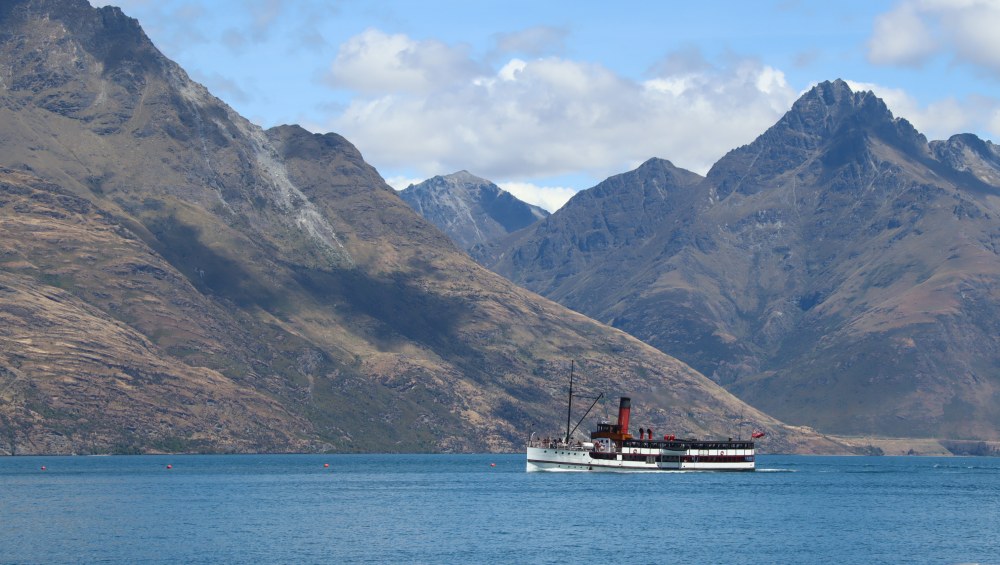
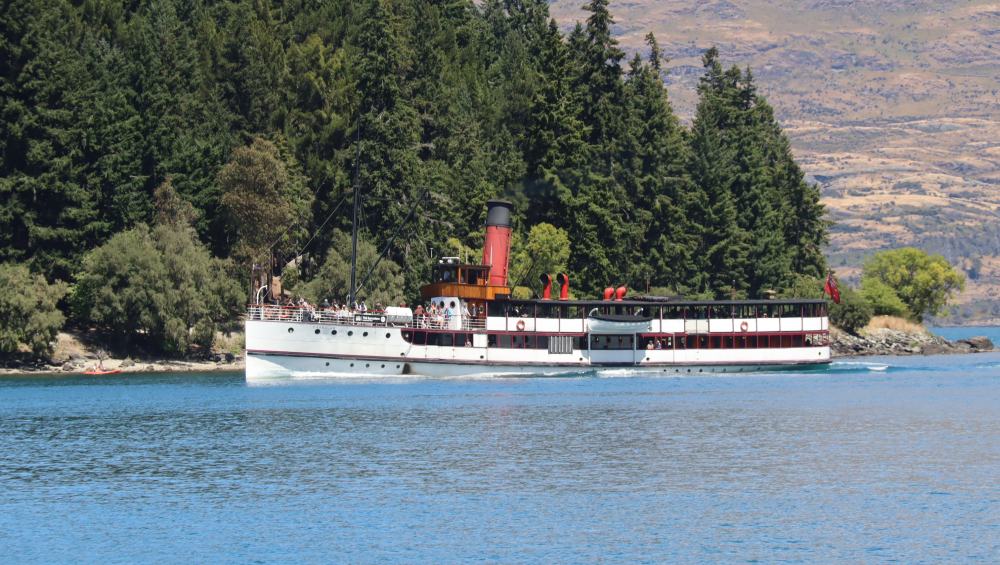


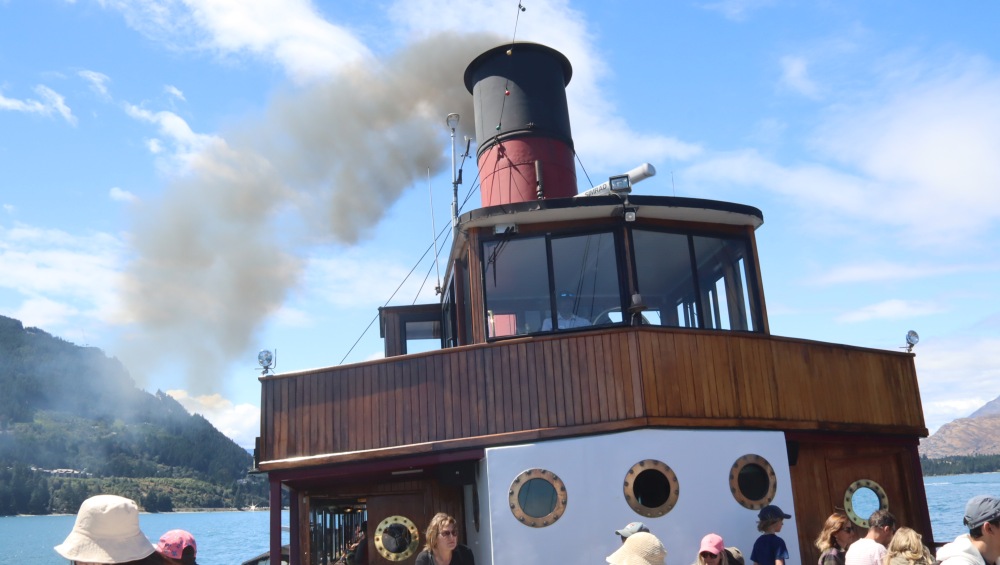

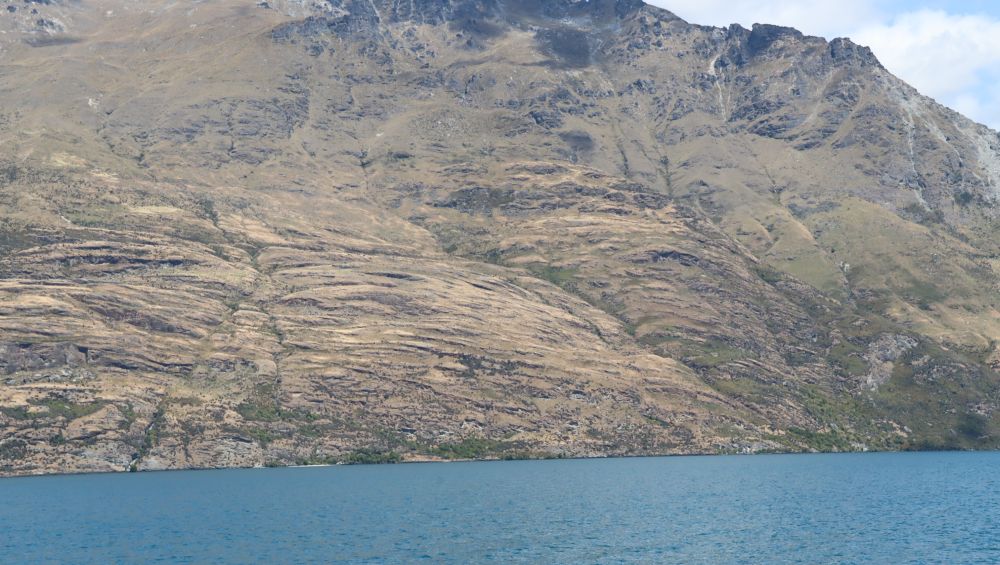

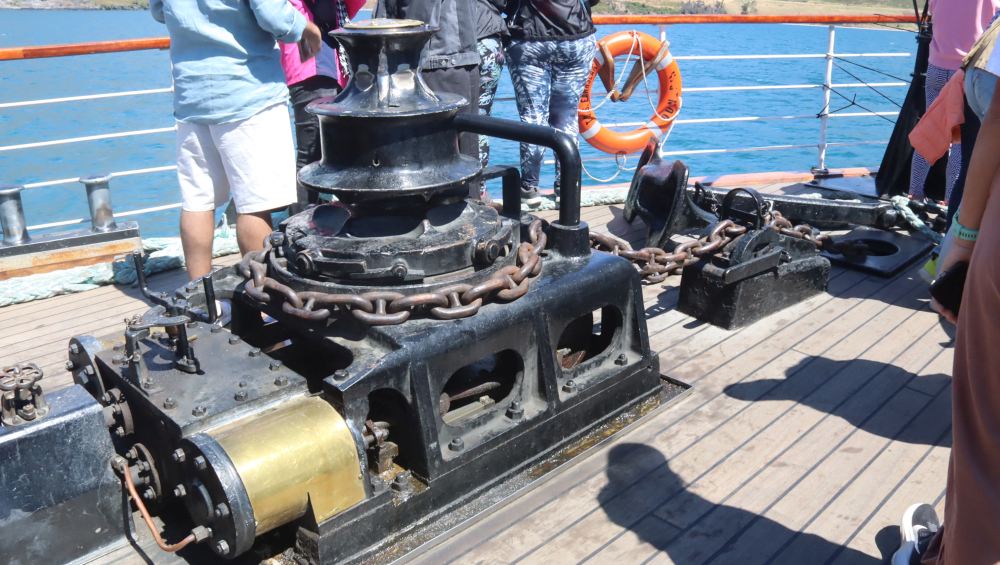
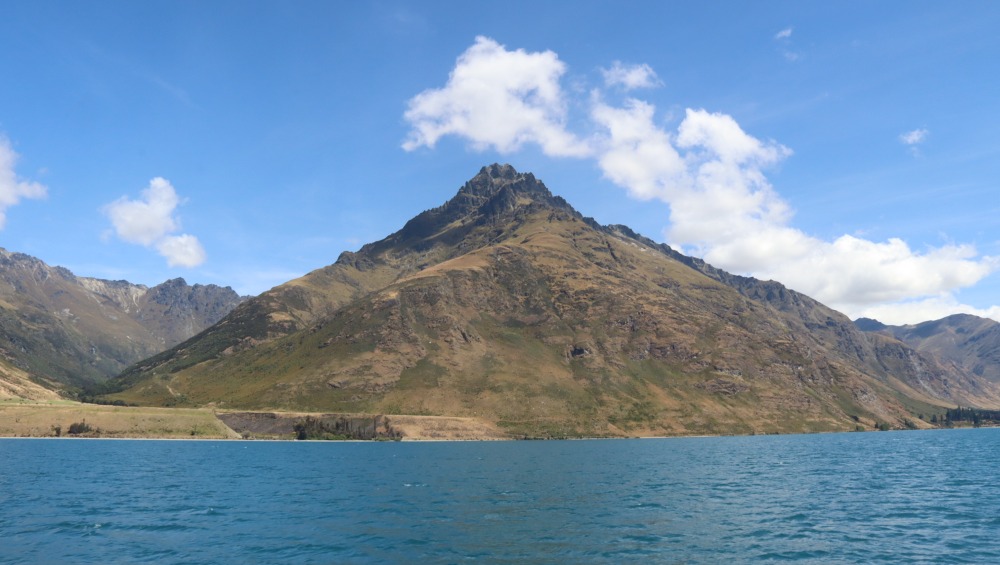
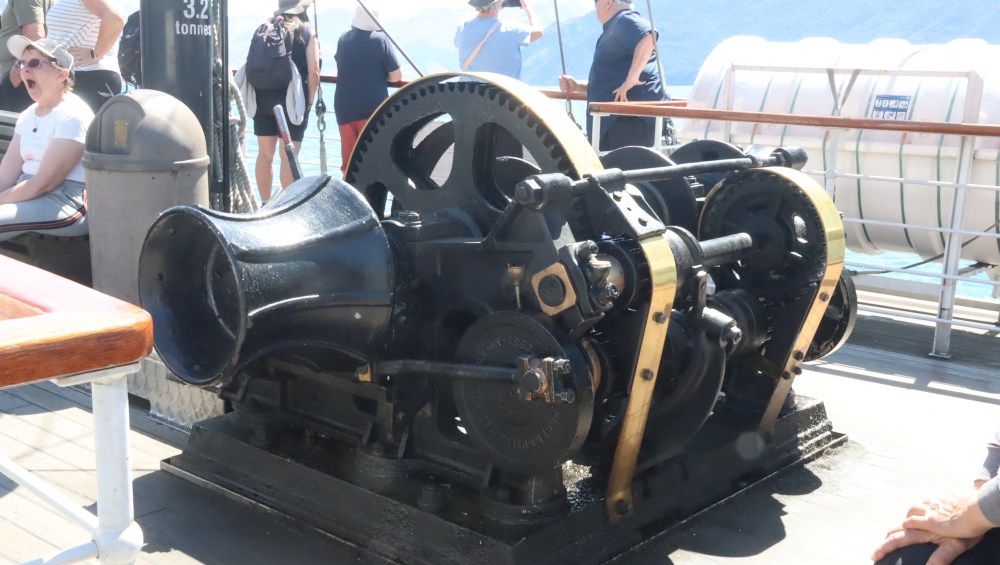


When the TSS Earnslaw got to its destination, a forty-five minute journey across Lake Wakatipu, it unloaded some of its passengers who were going to enjoy the experiences of the Walter Peak High Country Farm, and picked up those who had.


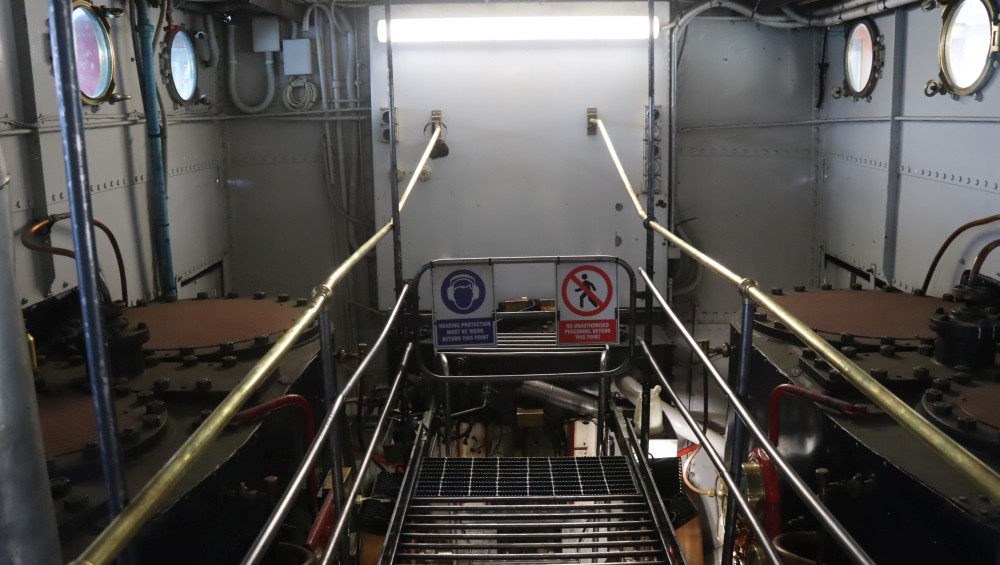
While we waited for the return journey to start, we chatted to one of the engineers. This is how he spends his retirement, and he loves it. But, boy!, it must get hot in the engine room during the heat of summer.
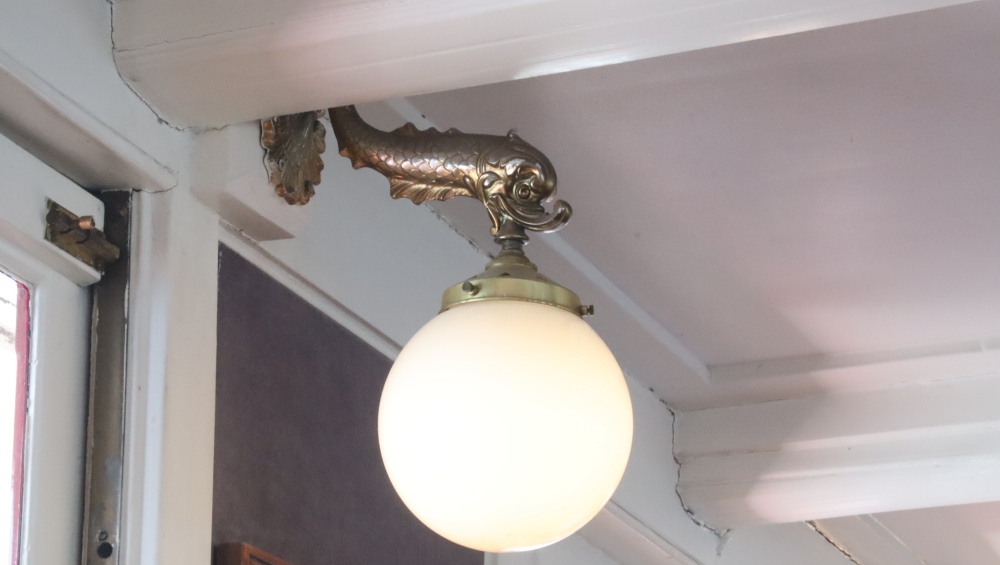
For the return journey, we did a bit of exploring of the ship’s interiors. Lovely. All brass and Kauri wood, although the saloon may not be quite as comfortable as the Wanderers. But they did have a bloke playing the guitar and singing (the piano was playing earlier). He started on “Sweet Caroline” and a whole heap of people joined in. But, the way most of them were raising their glasses, they had probably had some of the inhibitions lubricated away.
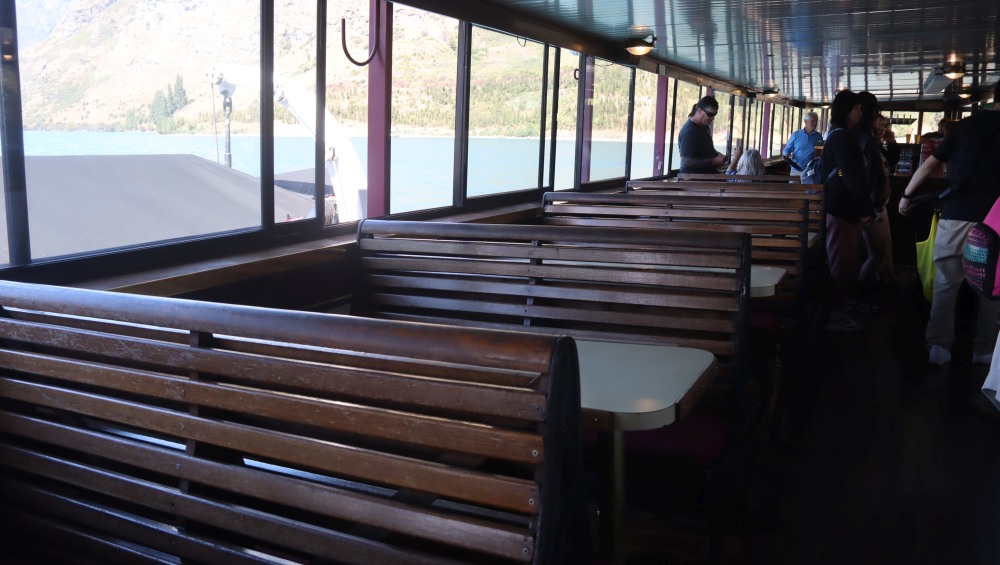
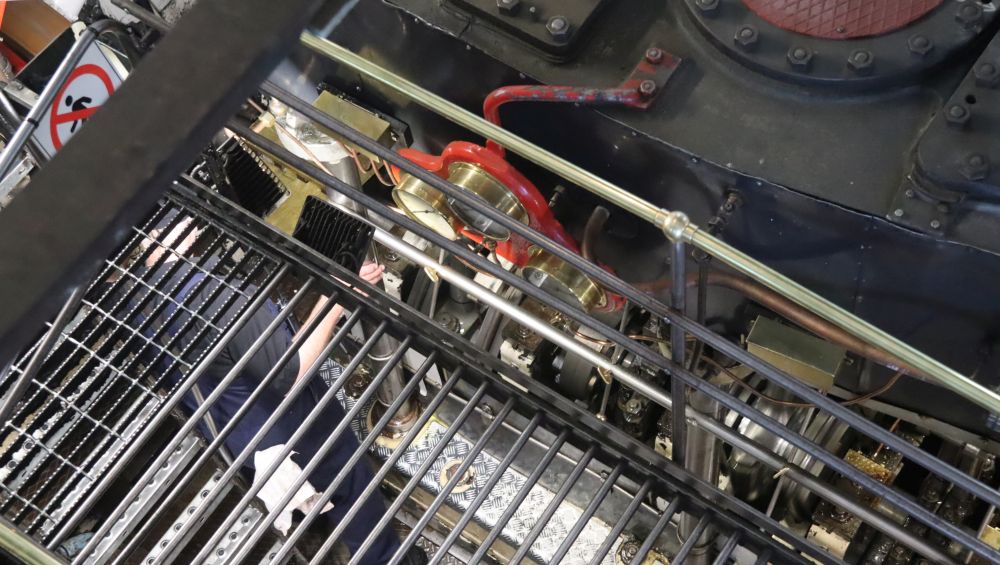

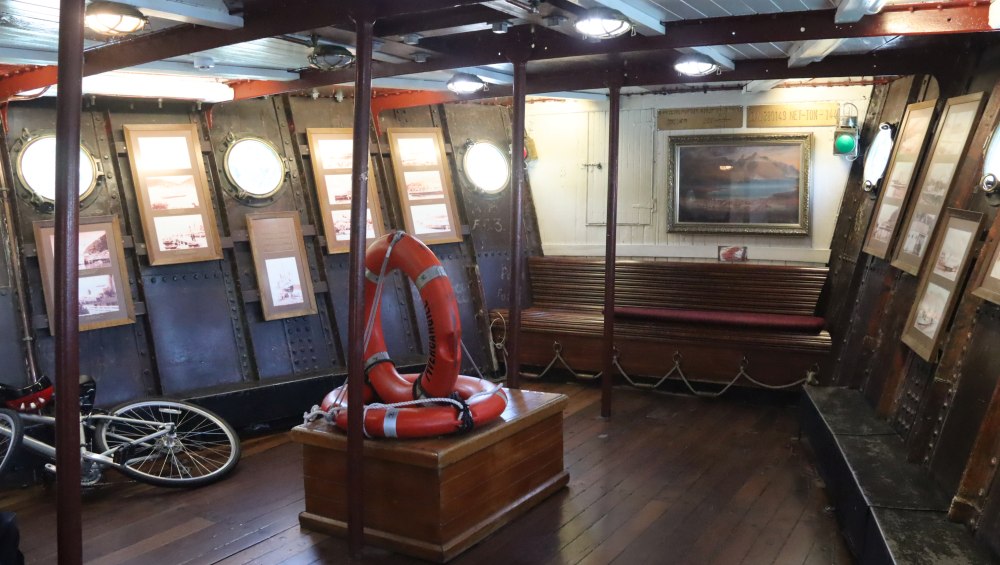


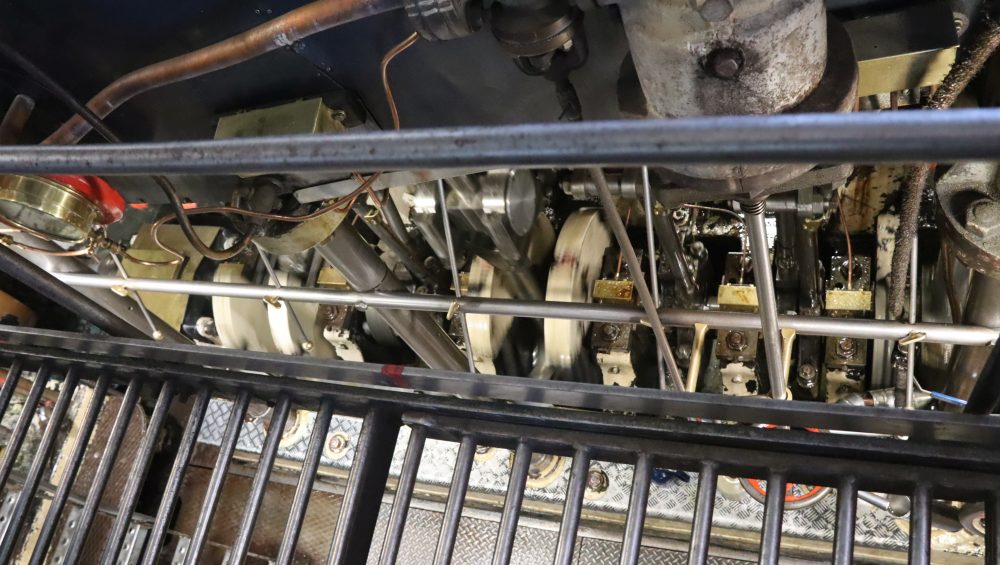





We disembarked back in Queenstown, and I thanked the skipper for a lovely, extremely smooth journey. You weren’t even really aware of the movement of the ship unless you were below decks and could hear the throbbing of the engines.
I bought another of the “floaty pens” with the TSS Earnslaw chugging along, and then we headed into town and bought a “Tank” smoothie each and sat in another park and chilled.
I’d been determined that, whilst in Queenstown, I was going to have a Ferg Burger. But the queues have always stretched for miles and we’ve got better things to do, so instead we went to Pog Mahones’ Irish pub and restaurant. I’m not sure how Irish the Chicken Parmigiana was, but it was tasty. (I do have my doubts about places that have a full drinks menu and then in the small print at the bottom add We also have a range of non-alcoholic drinks. Then tell us about them!
It was the Sunday Irish traditional session, so we had a little band of fiddlers, drummers, and other instrumentalists playing away. They were loud, they were repetitive, but they were not obnoxious, and we were far enough away that it added to the ambience (not ambulance) of the meal.
Following that we returned to Lylo and did some blogging in the lounge. This is one slight disadvantage of Lylo Queenstown; their communal area was too small to be really useful. But the only other option was to sit in our pods and type, so we, and everyone else, made do.
Naturally, because this was our last night in the South Island and was (cities aside) the most urban place we were staying at, it was the only clear night we had for star gazing. We’d been to two internationally recognised dark sky locations, and of course you couldn’t get much further from light pollution and still be on the New Zealand “mainland” than Doubtful Sound, yet it’s Queenstown that we finally get the chance to do some star gazing.
But where to go where there wasn’t light pollution to cloud the view?
We asked at Lylo’s reception, and the lady on duty suggested the stadium – if there wasn’t anything on. Not really knowing where that was, we decided to simply head for the hills and hope for the best. Perhaps the Kiwi Park would be a good place to start?
It was locked. (Of course.)
Over the road was the original town cemetery. (You may remember in the news about a slip beside the gondola taking out some graves? This was the place.) Being an old cemetery, and despite being the dead centre of town, we decided that it had potential as an observatory, and so we stood amongst the dead and looked at lights that were emitted millions of years ago.
It wasn’t as intense a spectacle as it would have been if we’d been further south and with less light pollution, but it was still pretty. And we saw a couple of satellites and a meteor. And Mars and Jupiter, and probably Venus.
And we heard the TSS Earnslaw blow its horn as it returned to port.
About 11.10 we decided to head back to Lylo and then had the fun of trying to get ready for bed without waking up our bunkmates.
Steps = 15,326
Kilometres = 10.6

 Purupuss's Purrings